LEGO-Based Therapy
LEGO-Based Therapy is a social development program that uses LEGO activities to support the development of a wide range of social skills within a group setting.
At the beginning of every school year parents find themselves asking if their child is ready for the brand new world that is primary school. It’s certainly a big step up from pre-school and not just because of the uniforms and shoe-lace tying. Formal schooling presents many new challenges to children in terms of the … Read more
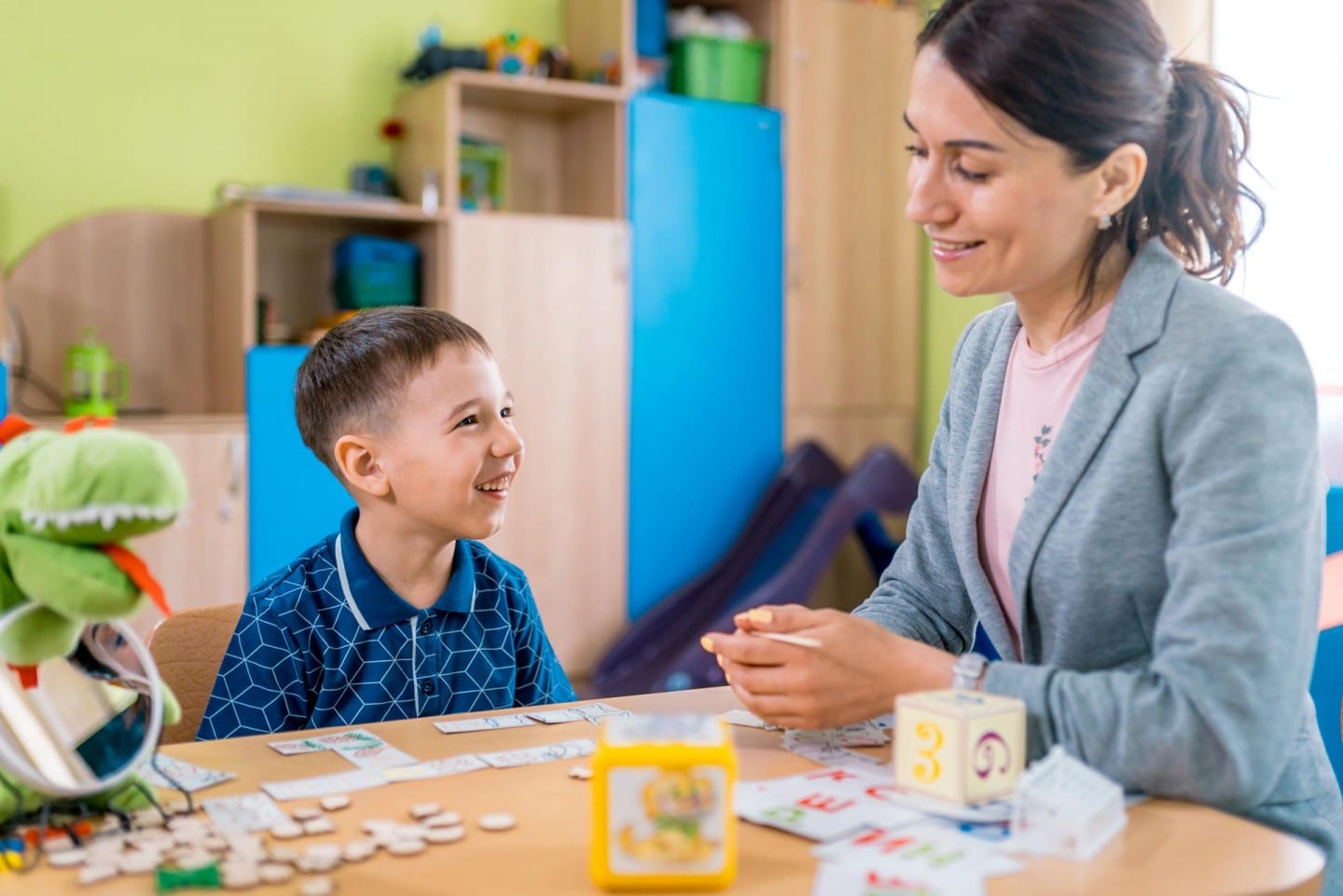
Clients are often more comfortable in their home environment. This means our clients are more likely to be in the correct frame of mind to learn and build their communication skills. It also means it is often quicker and easier for the therapist and the client to form a bond. No travel time for families. … Read more
At this time of year, every year, parents find themselves asking if their child will be ready for the brand new world that is primary school. It’s certainly a big step up from pre-school and not just because of the uniforms and shoe-lace tying. Formal schooling presents many new challenges to children in terms of the … Read more

1. Play face-to-face games with your child For instance, bubbles, throwing a ball, row row your boat or peek-a-boo. These games provide opportunities to engage with your child using not only your words but also each other’s facial expressions. This promotes your child’s attention and increases social interactions. 2. Expand on words your child is already … Read more
Riddles Choose an object e.g. animal, furniture, food, transport etc and give clues without revealing the name of the object e.g. it’s a large grey animal, it has big floppy ears, it has a trunk. Category games Games that involve generating items from a set category in a given time period e.g. tell me as … Read more
Story retell tasks Using books that are very visual to help with visualising/verbalising skills i.e. helping the student to retain a visual image to help with memory and recall. As you progress through the story highlight important and unusual events, talk about how the characters feel, try predicting what will happen next, before you leave … Read more
Correcting incorrect sentences Give the students examples of incorrect grammar and syntax and have them identify the errors and choose the suitable replacement. Initially they may need a choice of two answers but as they progress they should be able to generate some of their own responses. E.g. The mouses ate the cheese, The girl … Read more
The prevalence of speech and language impairment in school aged children is significant, with one study in NSW (McLeod & McKinnon, 2007) revealing that 13% of children at primary and secondary schools have a communication disorder. Australian teachers report expressive language difficulties in around 21% of children when they enter school, and receptive language difficulties … Read more
Stuttering is a highly variable communication disorder that affects many young children. Many children exhibit early signs of stuttering or disfluencies during their preschool years. While it is not uncommon for children to ‘outgrow’ their stutter, it is impossible to determine whether stuttering is going to resolve itself or become a life-long ongoing problem. As … Read more